Beba Epstein: The Extraordinary Life of an Ordinary Girl

Jakob Skote
Co-founder of Meadow
For the YIVO Bruce and Francesca Cernia Slovin Online Museum, augmented reality brings an online exhibition about a Jewish girl from 1930s Vilna to the streets of modern Vilnius — returning archival material to the city where the story took place.
In 1933, an eleven-year-old girl named Beba Epstein sat down in Vilna, Poland, and wrote her autobiography. She described herself as mischievous — she broke plates, tore up her cousin's geography paper, and hid from God when her grandfather warned her to behave. She loved ice skating, swimming, and reading in Yiddish. She was, by her own account, "very loved at home, but they don't spoil me."
Beba's autobiography was written for a YIVO youth writing contest. It survived the Holocaust through extraordinary circumstance — smuggled from the Nazis by the famous "paper brigade," a group of Jews in the Vilna Ghetto who risked their lives to rescue Jewish documents, then hidden in a church basement by a Lithuanian librarian during a Soviet campaign against religious materials. It was rediscovered in 2017.
The YIVO Bruce and Francesca Cernia Slovin Online Museum built their inaugural exhibition around Beba's story: Beba Epstein: The Extraordinary Life of an Ordinary Girl. The digital exhibition uses interactive storytelling to weave together more than 200 artefacts from the YIVO archives, following Beba from her childhood in Vilna through the horrors of the Holocaust and her eventual immigration to the United States. 3D renderings let visitors explore the Vilna building where her family lived. Storybook-style animations bring her childhood to life.
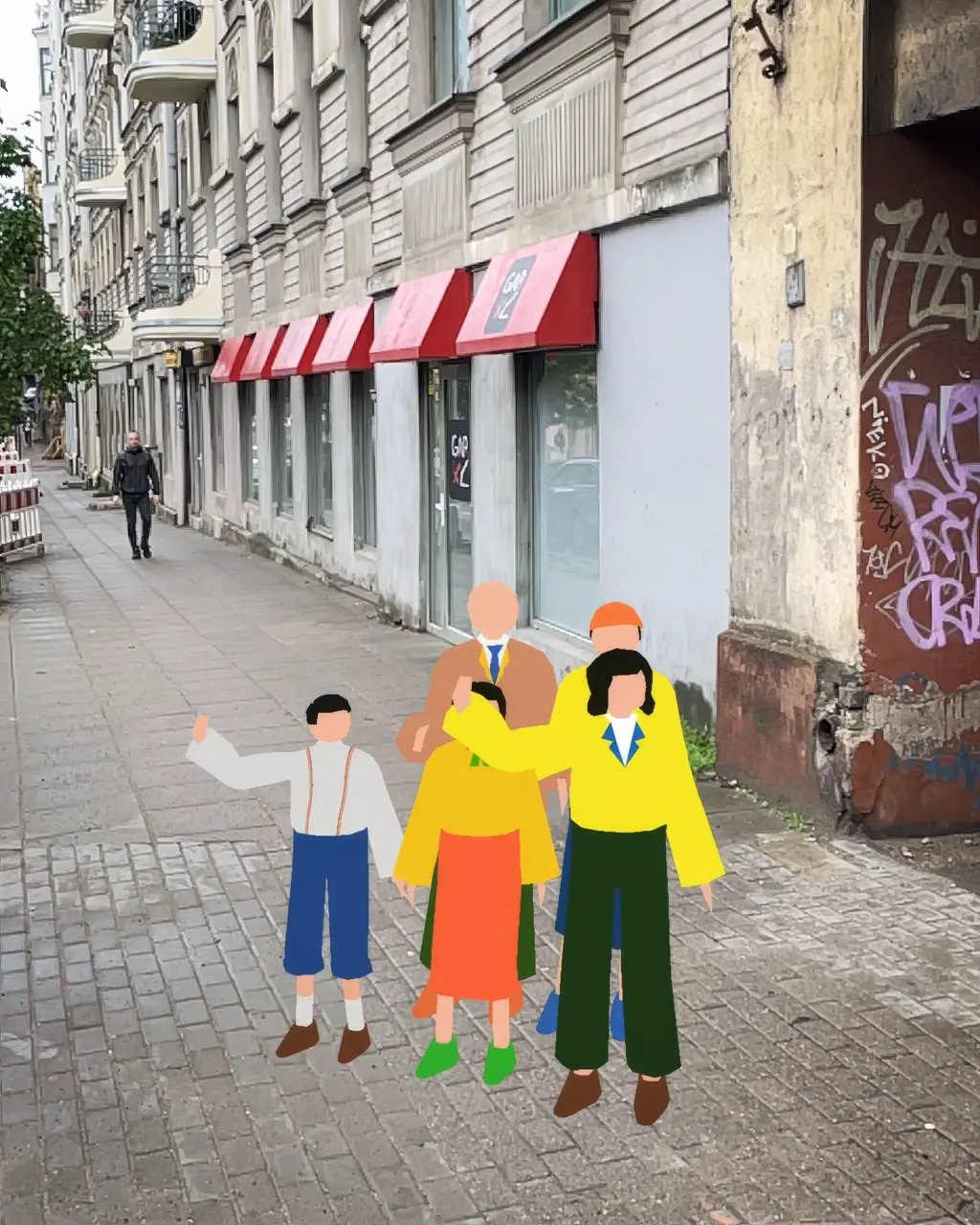
In 2025, this online exhibition took a new form. Through augmented reality, Beba's story was brought to the streets of Vilnius — the very city where she grew up. Visitors walking through modern Vilnius could use AR to encounter fragments of Beba's world layered onto the contemporary cityscape: the locations she described in her autobiography, the streets she walked, the buildings she knew, now overlaid with the stories and artefacts from the YIVO collection.
The project bridges a distance that most museum exhibitions cannot. The YIVO Institute is based in New York. Its collections document a world that existed in Eastern Europe. The online museum makes those collections accessible globally. But the AR layer in Vilnius does something different: it returns the story to the place where it happened, connecting archival material to physical geography in a way that neither a website nor a traditional gallery can achieve.
Walking through Vilnius with Beba's story in augmented reality collapses the distance between archive and place. The documents are no longer just records — they become part of the city again.
What makes this project particularly compelling is its layering of time. A visitor stands on a street in 2025, looking through their device at a building that exists today, and sees the story of a girl who lived there in the 1930s, told through artefacts preserved by an institution founded in the same city in 1925. The technology is incidental to the emotional effect: you are standing where she stood, seeing what she described, in a city that has been transformed beyond recognition and yet is still, somehow, the same place.
Beba Epstein survived three concentration camps, including Kaiserwald and Stutthof. After the war, she made her way to the United States with the help of her uncle, an activist in the Jewish Labor Committee. She worked as a social worker in Los Angeles, assisting Russian Jewish refugees. She passed away in 2012, her family not knowing her exact age until her autobiography revealed she was 89 — just two days short of her ninetieth birthday.
Her story is both particular and universal. The YIVO exhibition makes it accessible to anyone with an internet connection. The AR experience in Vilnius makes it tangible — something you walk through, not just read about.
Tags
Stay Updated
Get more stories like this delivered to your inbox.