Blocks at Large

Jakob Skote
Co-founder of Meadow
A prototype of a sculpture built from wood and pixels; exploring public art at the threshold between virtual and the physical realms. Created for the Campfire Conference in Skövde, the work consists of wooden blocks with hand-painted tracking codes that control digital twins 20x larger in augmented reality.
We were recently invited by Lars Kristensen at University of Skövde to create an artwork for the Campfire Conference, a gathering bringing together professionals working at the intersections between performance art and game development.
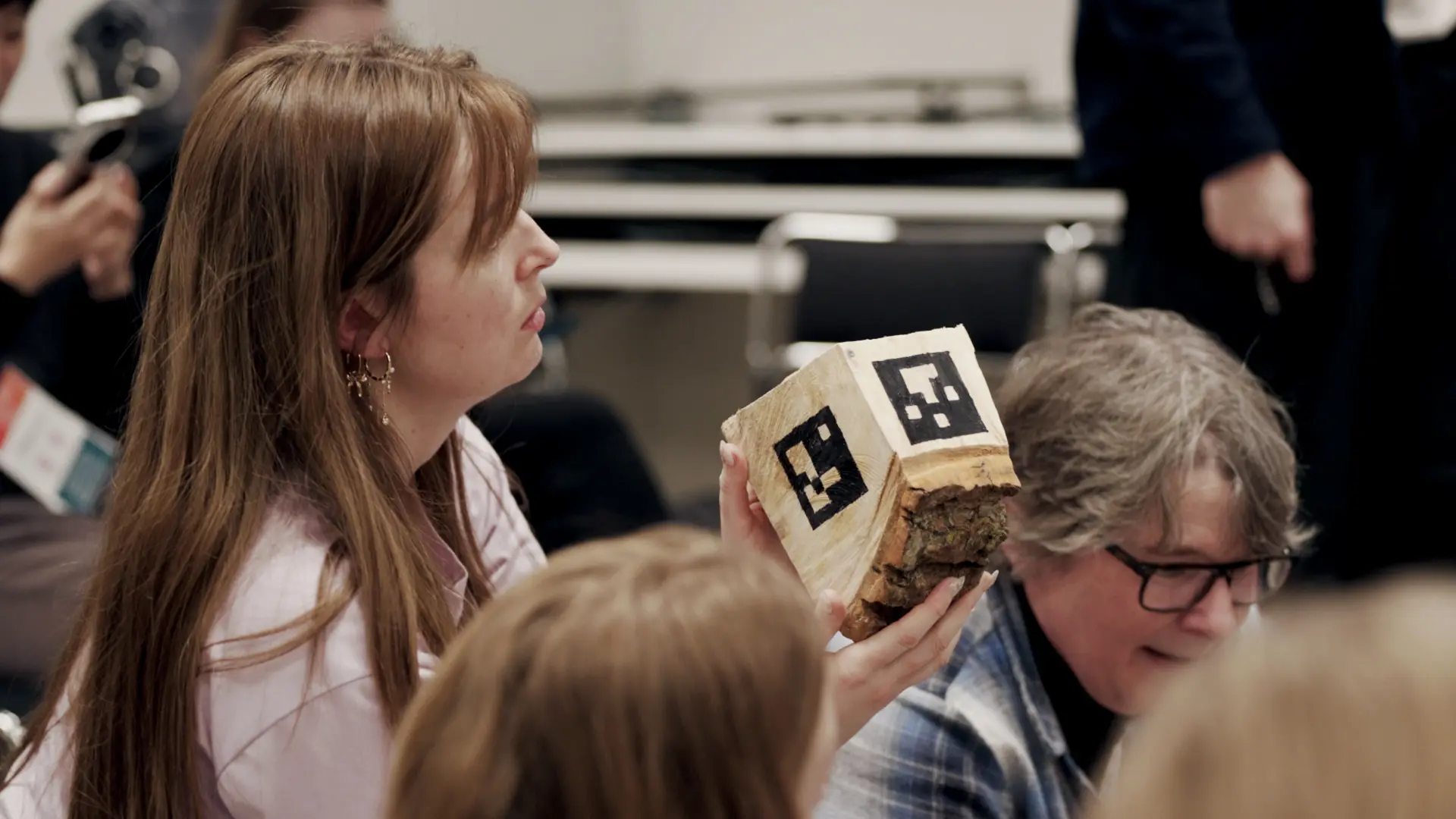
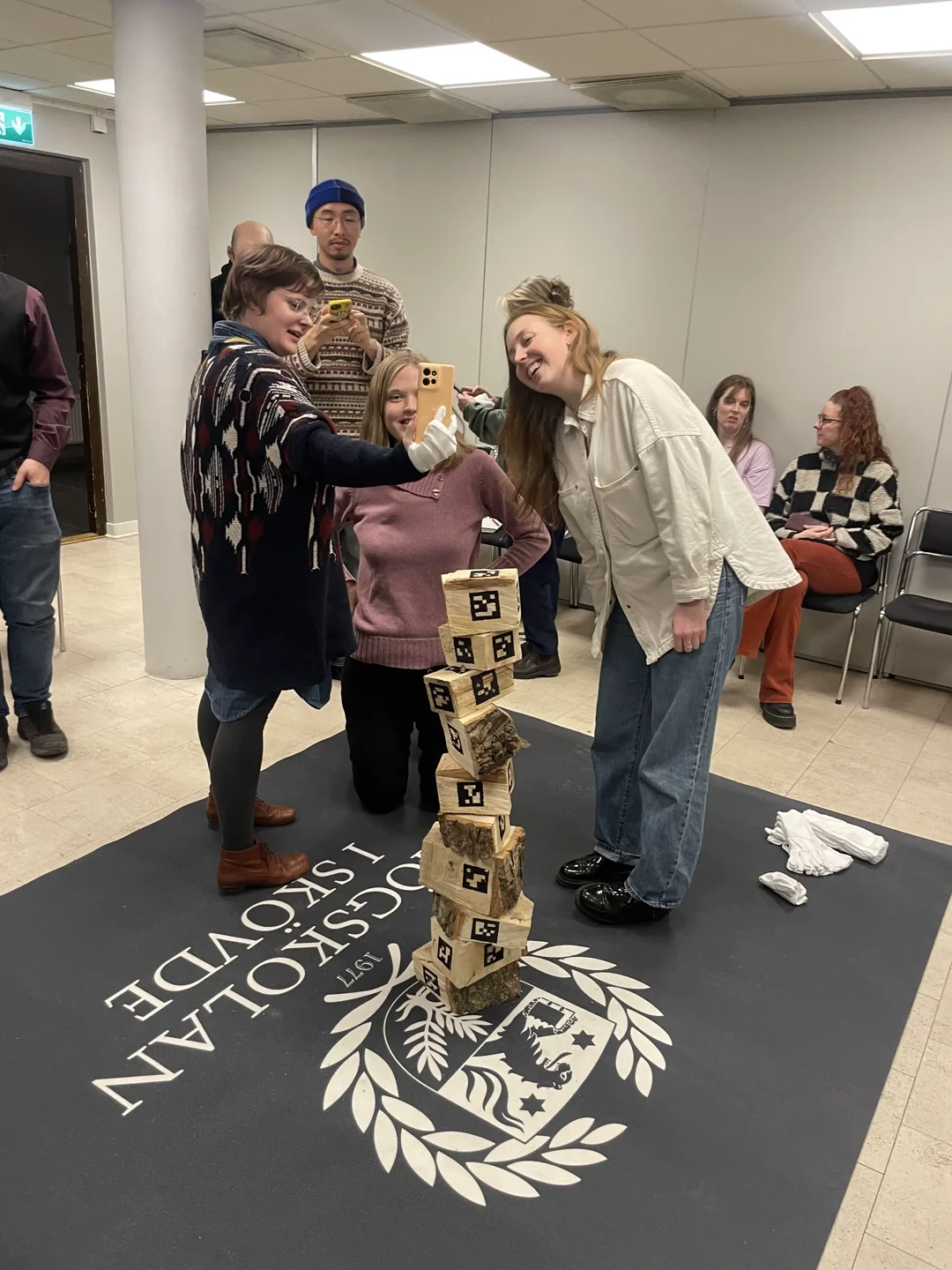
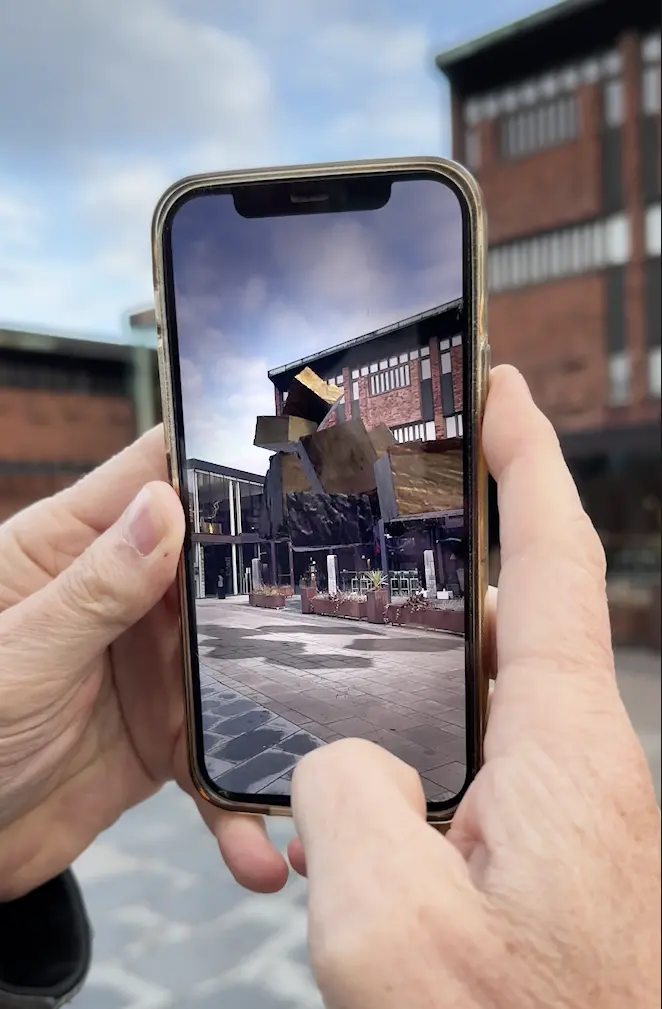
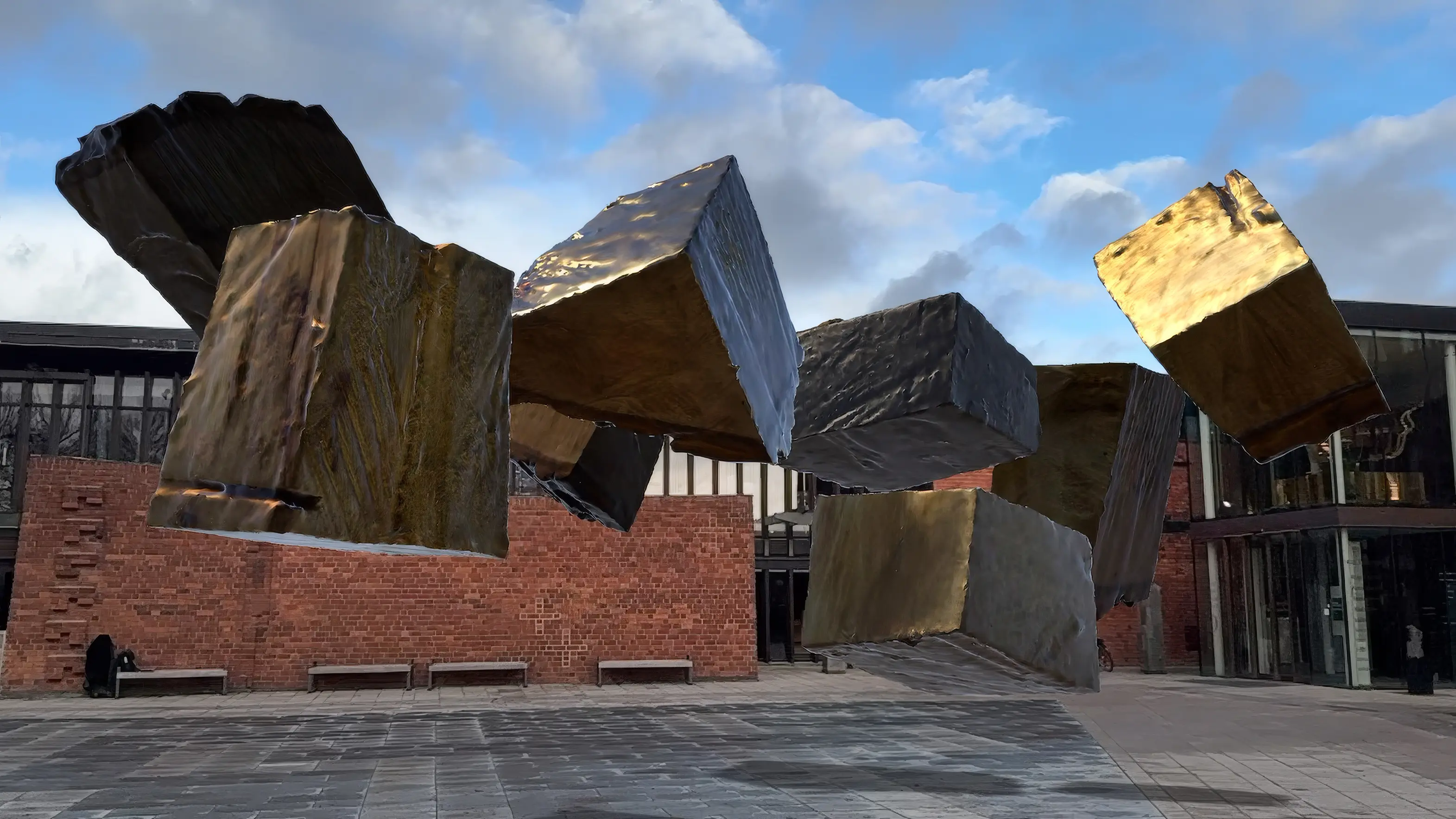
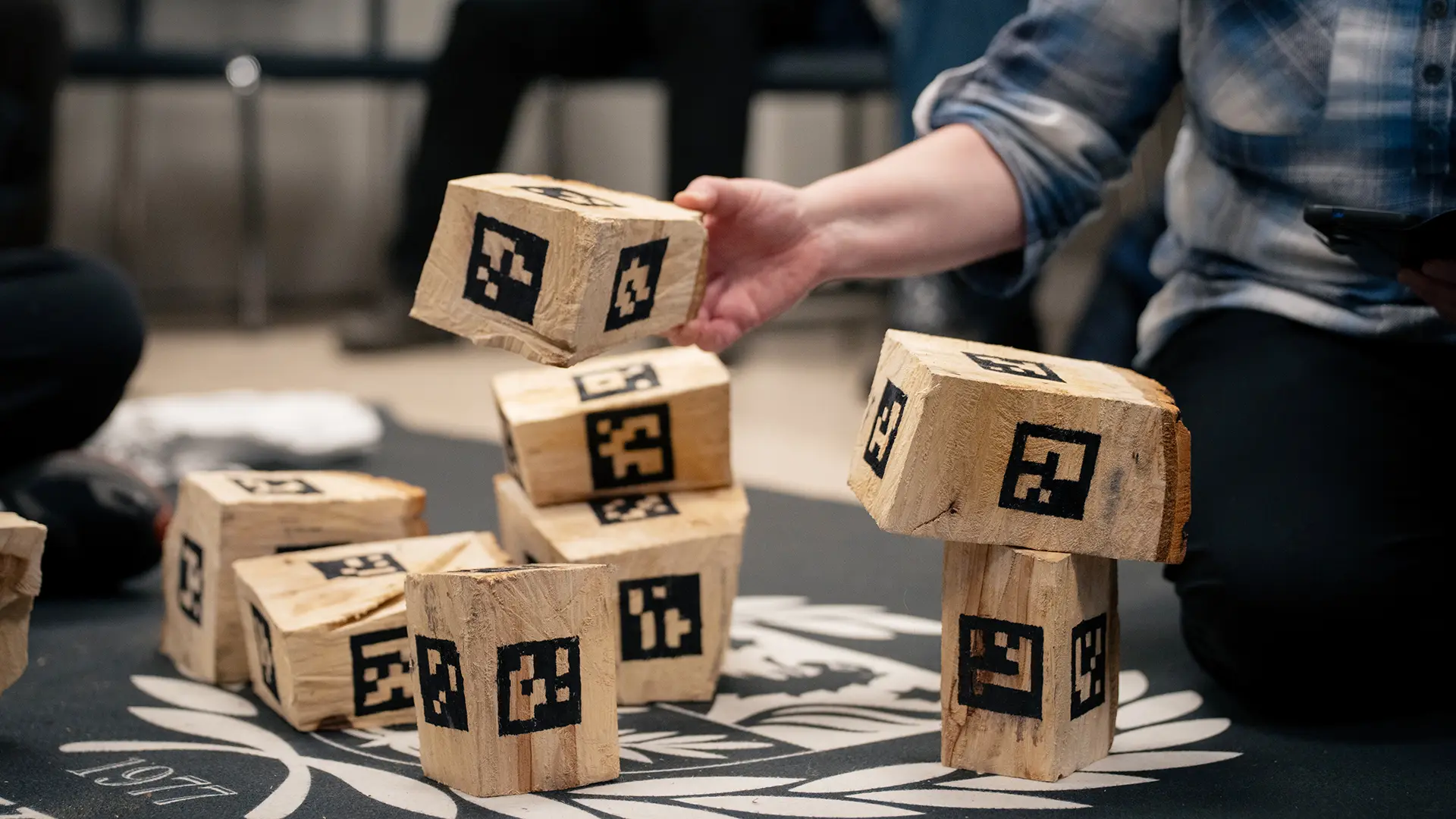
Blocks at Large consists of 10 wooden blocks roughly chainsawed out of white poplar, with black tracking codes hand-painted on each face. Each physical block is connected to a virtual twin, 20x larger, seen in augmented reality. As you move a block, you simultaneously rearrange a virtual public artwork on the square outside the conference venue.
The work is deliberately split across spaces. You handle the physical blocks indoors, while the resulting sculpture exists outside, at the public square. As you move a block, you don't see how your play affects the outside sculpture, and when you stand at the square, you don't see those who shape the massive forms towering above you.
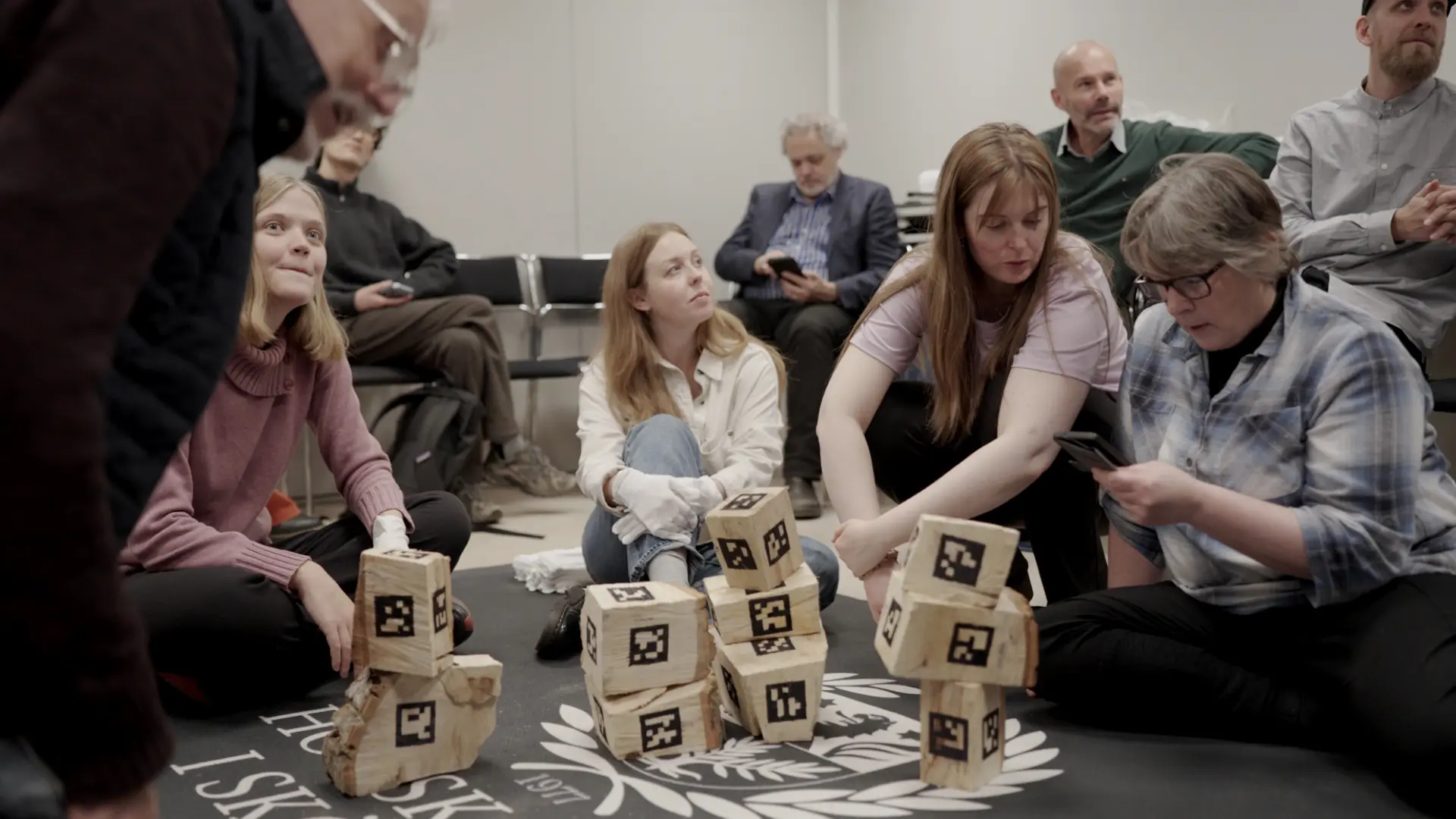
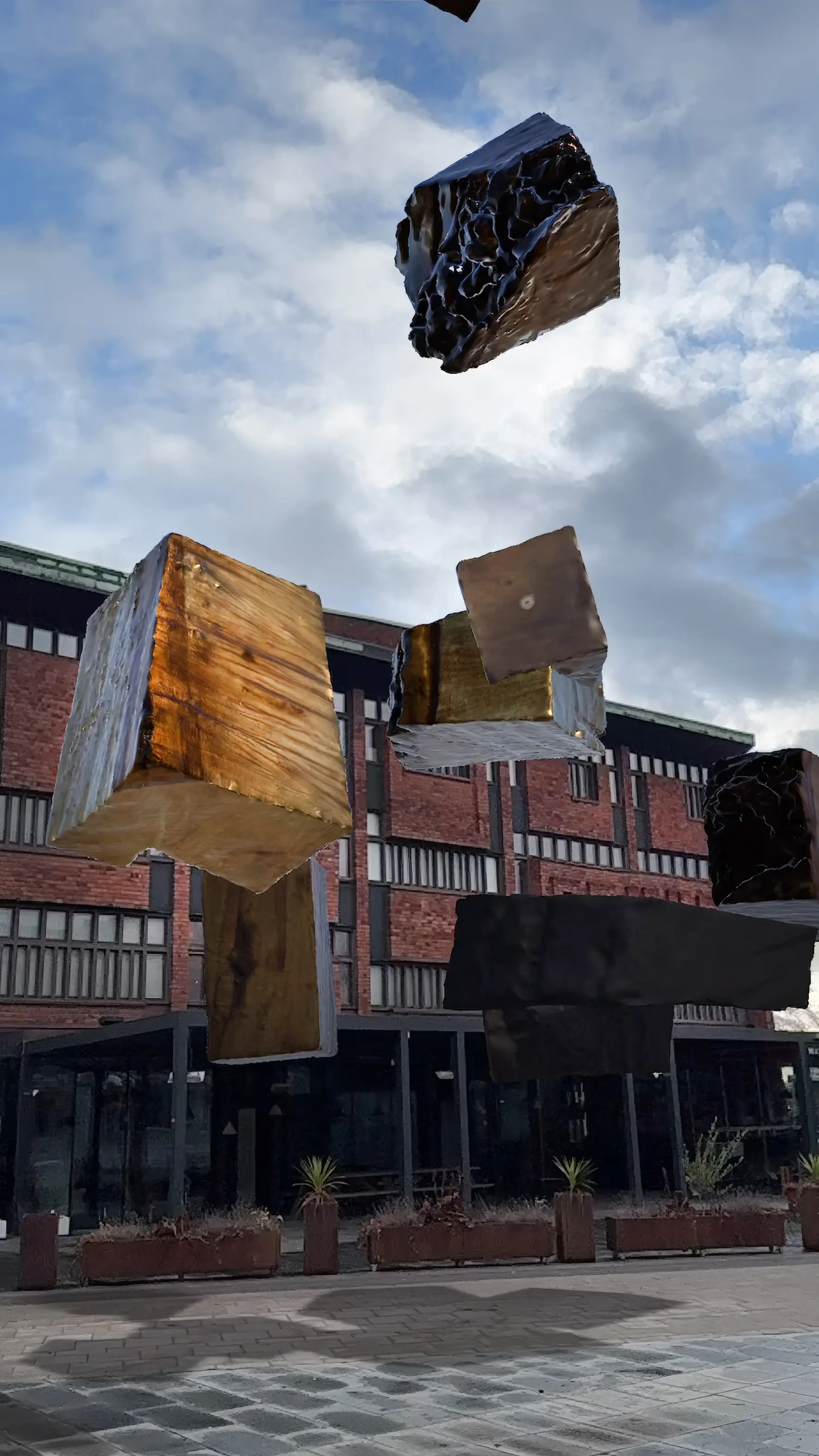
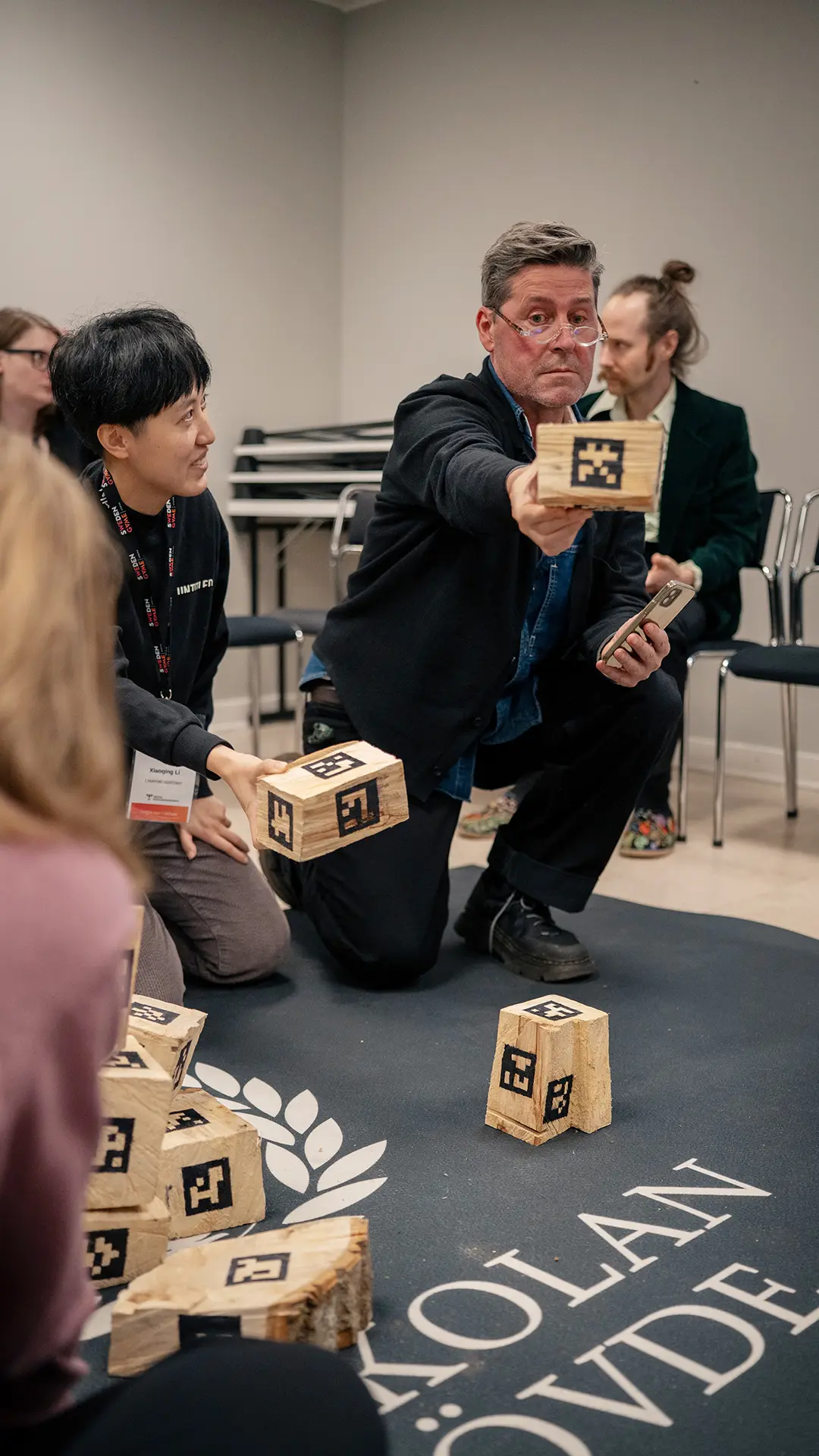
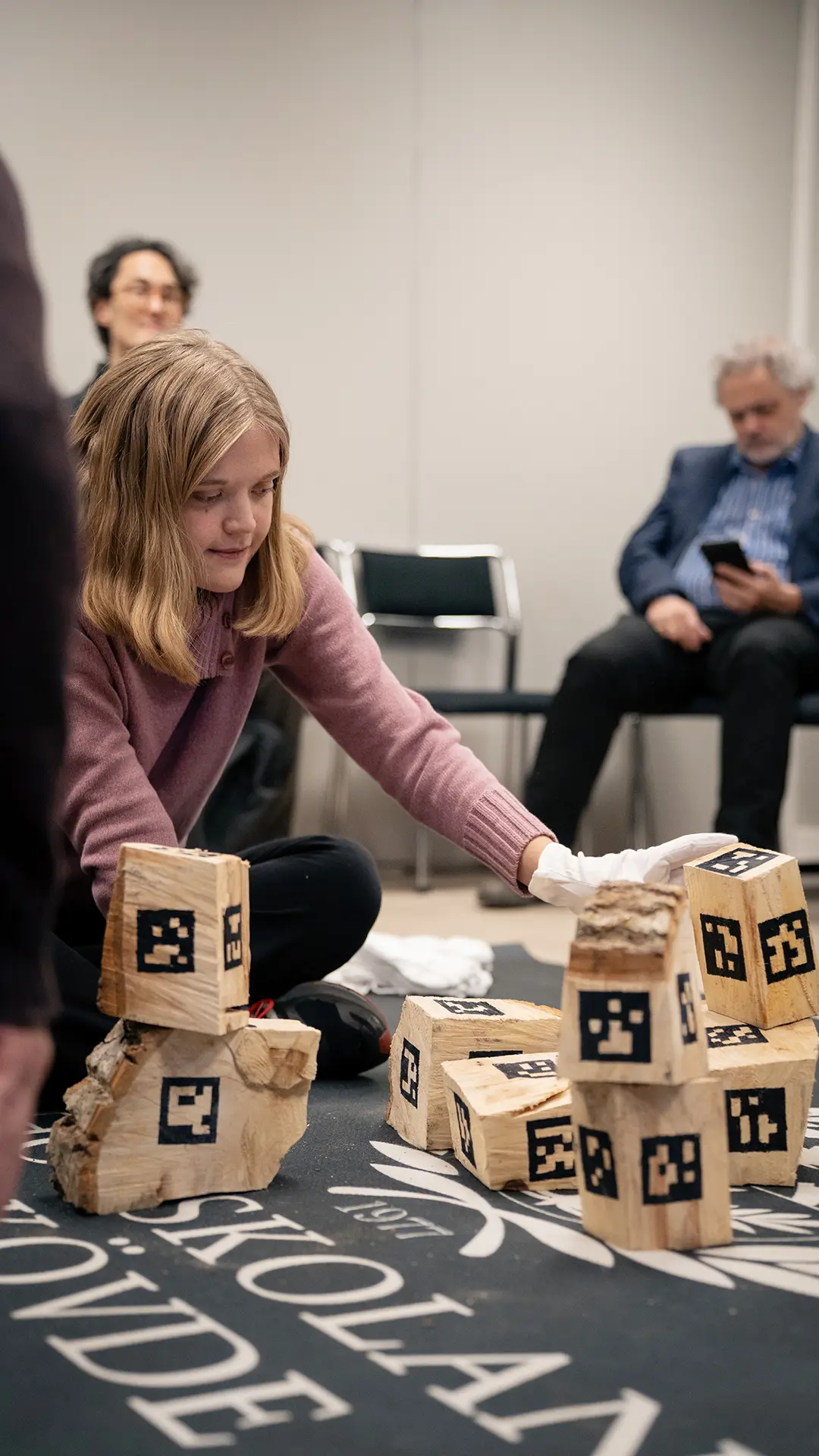
People interacting with the physical blocks, and the resulting AR sculpture.
The digital world is always rooted in the physical. Each bit depends on real power, each pixel relies on real matter; servers, cables, rare earth metals, human labour. In this work, that dependency is not hidden or abstracted away, but treated as the very material for the artwork; wood, paint, cameras, latency, scale. The virtual sculpture does not float above the world; it leans on it.
Much of our work revolves around moments where the boundary between the virtual and the physical realms becomes thin and unstable. When digital systems misbehave and leak into the real, it highlights this interdependency, and makes clear the fact that the digital is not an abstract space, separable from the messiness of material reality.
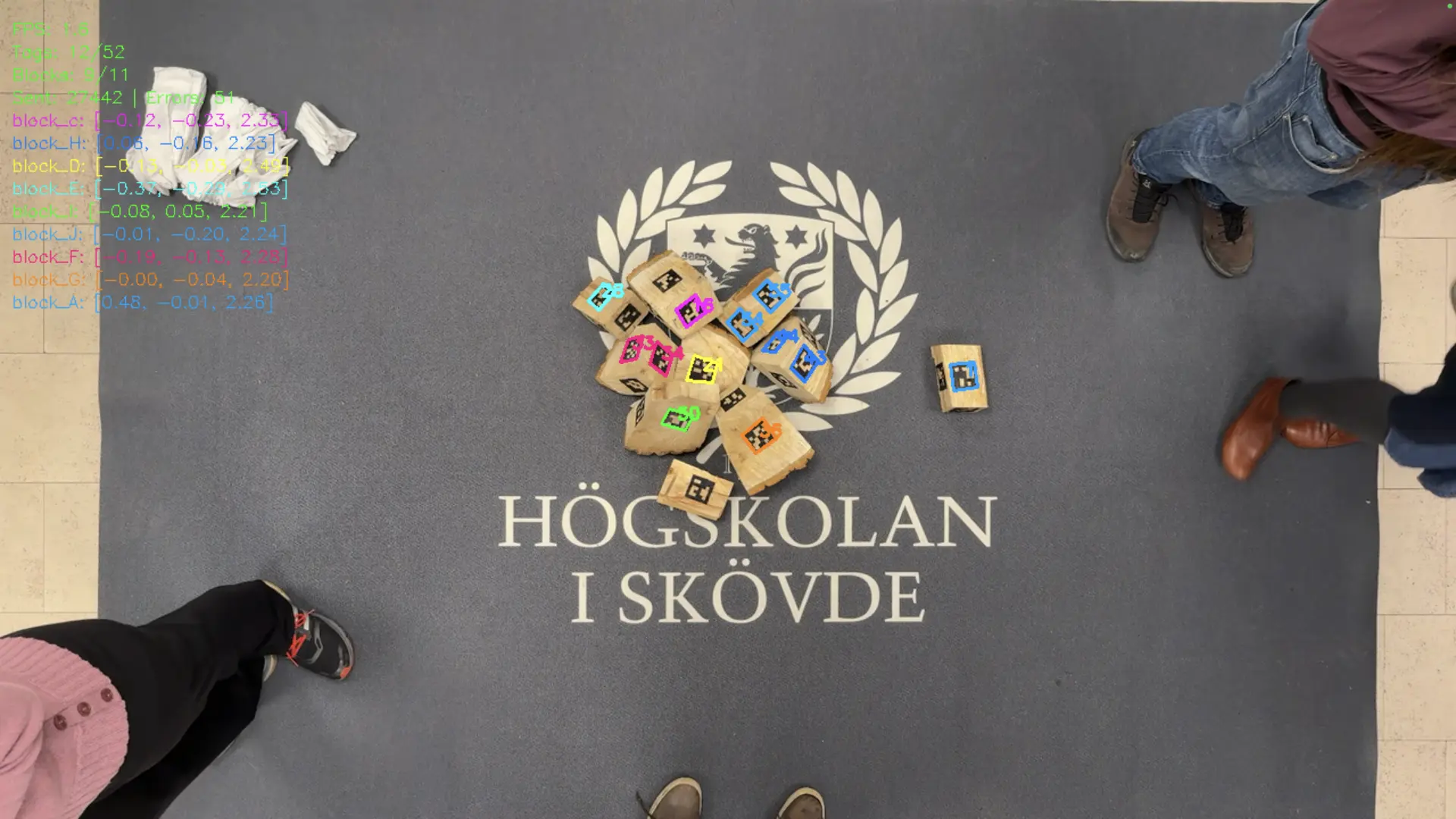
The OpenCV application tracking the blocks via ArUco codes.
We wanted the system behind the artwork to reflect this interdependency rather than obscure it. Technically, it's quite simple. A fixed camera and a small OpenCV application track the blocks via painted ArUco codes, calculate the position and orientation, and send this to the AR experience on Meadow.
The experience utilises our new Meadow API, which allows you to connect outside systems to control data in your experiences. You can check out the OpenCV repo and the Unity project at the links below:
By the way, did you know that you can upload a project file to your Meadow experience?
Useful to share your solutions with others and see how others built their experiences.
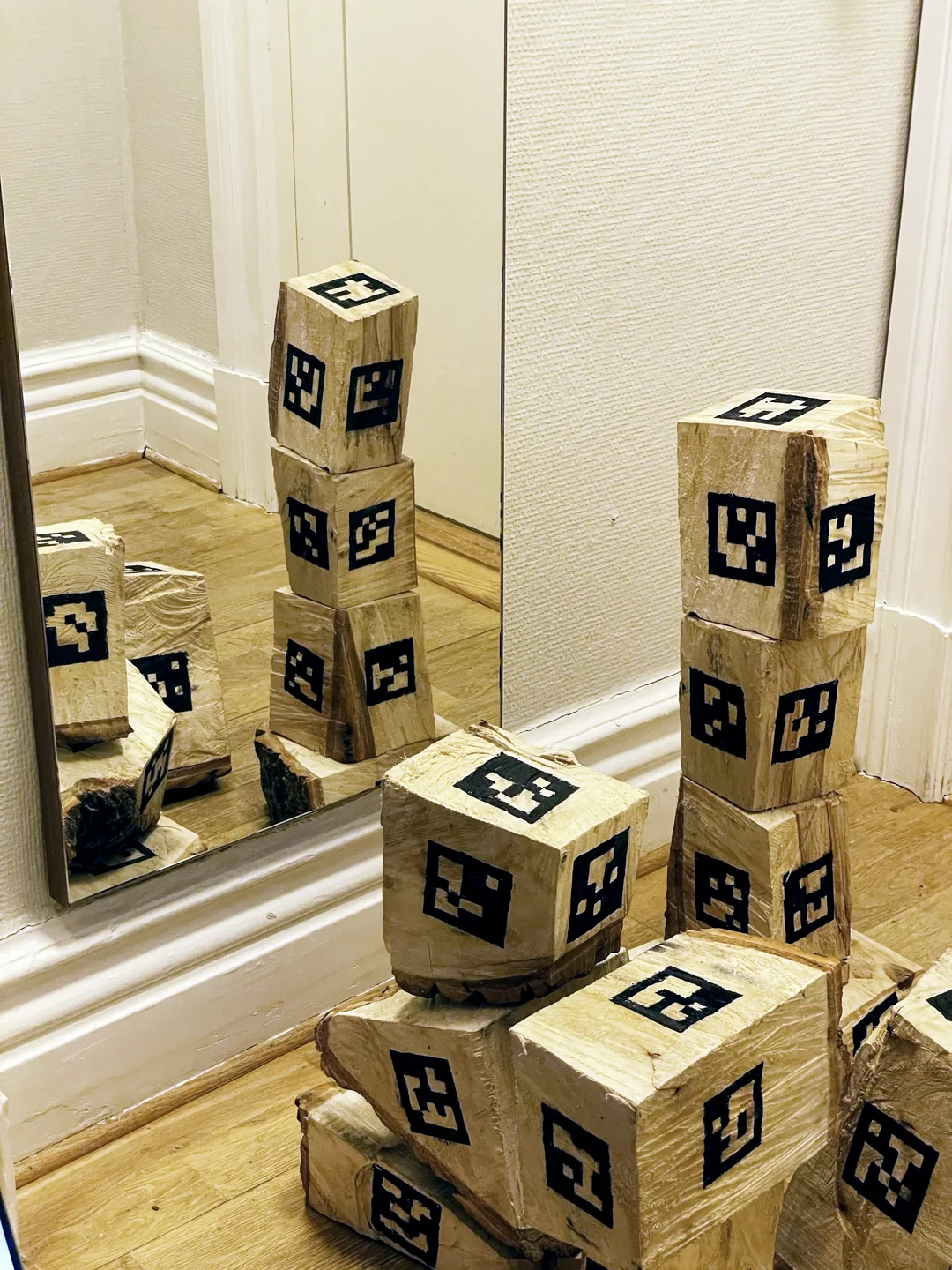
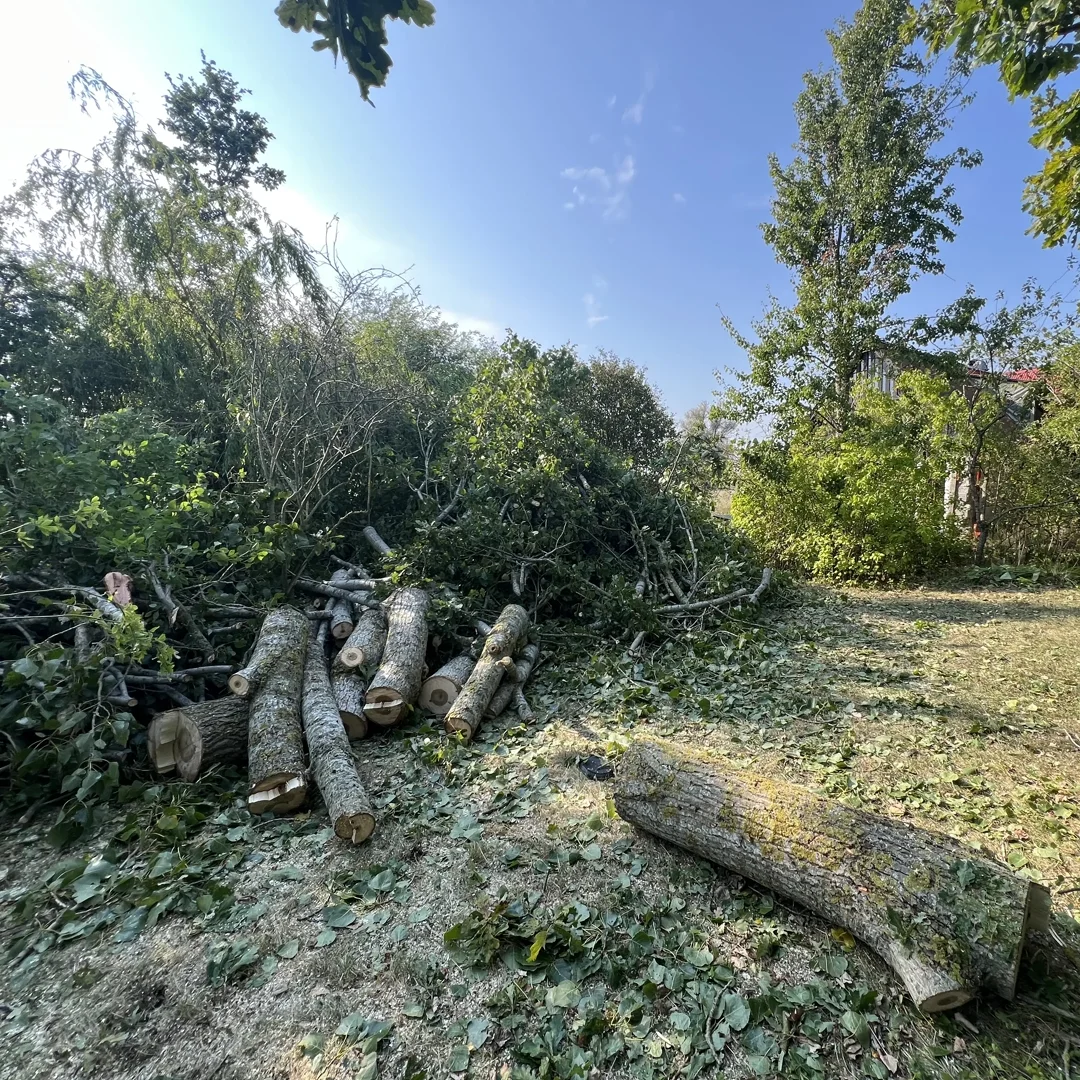
The wooden blocks, and the felled white poplar tree from which they were cut.
The black markers painted on the blocks function as a kind of braille for the computer, that allow it to track them. What is obvious to us humans is still often very challenging for the machine. Orientation, weight, proximity – all require careful annotation for a computer to perceive. Making the messiness of the physical world legible to a system is an act of translation, and a material gesture in itself.
The unevenness of the blocks, the imprecision of the paint, and the chaotic environment with blocks often hidden behind arms and hands, mean that the tracking is not perfect. We lean into this, and see it as an important aspect of the work. Just as the real world never looks exactly like on the map or the blueprint, the digital twins of the world will never be perfect renditions of their physical counterparts.
The blocks are cut from white poplar. In ancient Mesopotamian folklore, the poplar tree grew at the boundary between the world of the dead and the living. Its leaves are dark on one side, and light on the other, associating it with thresholds, crossings, and transitions. Using this wood was not planned in advance, but it felt an appropriate material to build objects situated between the real world and the digital spirit world of the internet.
Blocks at Large is both a prototype for a new kind of sculpture at the intersections between the physical and digital realm, and an attempt to think about public art after screens without pretending the screen ever disappears.
A huge thank you to Lars, Giulia, and the rest of the team at Skövde, to everyone who played with the work, and to the dear white poplar tree whose wood we used.
Tags
Stay Updated
Get more stories like this delivered to your inbox.