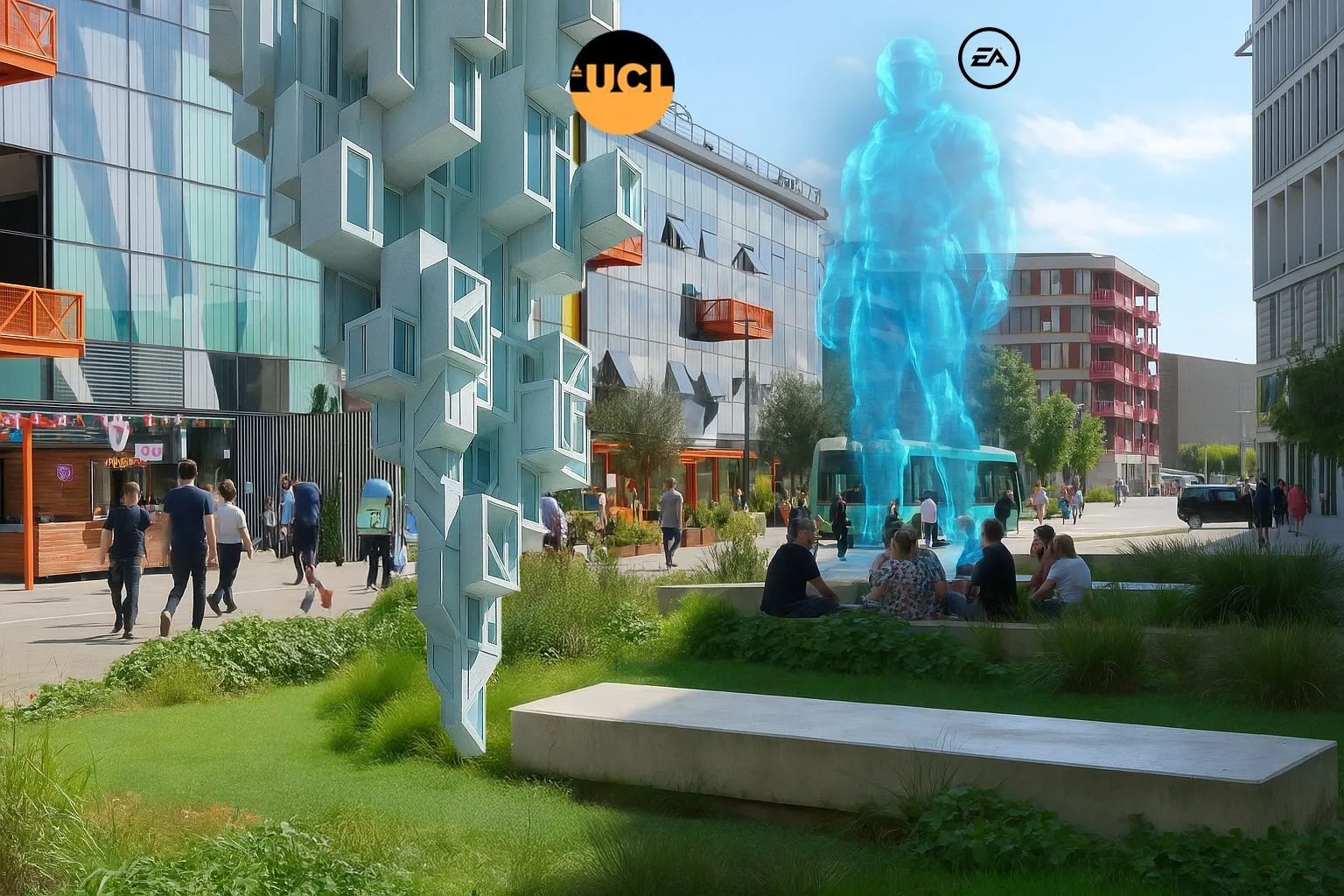
A Living Layer for London's Innovation Campus
Jakob Skote
Co-founder of Meadow
A collaboration between UCL, Untold Garden, and partners from five universities transforms Here East — London's innovation campus — into a navigable story of creativity and connection, using a web-based digital twin and a campus-wide AR layer powered by Meadow.
Here East is one of London's most ambitious innovation campuses — a converted press and broadcast centre from the 2012 Olympics, now home to universities, creative studios, start-ups, and research labs. But behind every studio door, there's work that neighbours never see. The campus hums with creative energy that largely stays invisible.
Here East Expanded set out to change that. A collaboration between UCL's Creative Experience Futures Lab, Untold Garden, Aquifer Film, and academics from UAL, UEL, and Loughborough University, the project asked a deceptively simple question: what if you could see the ideas happening around you?
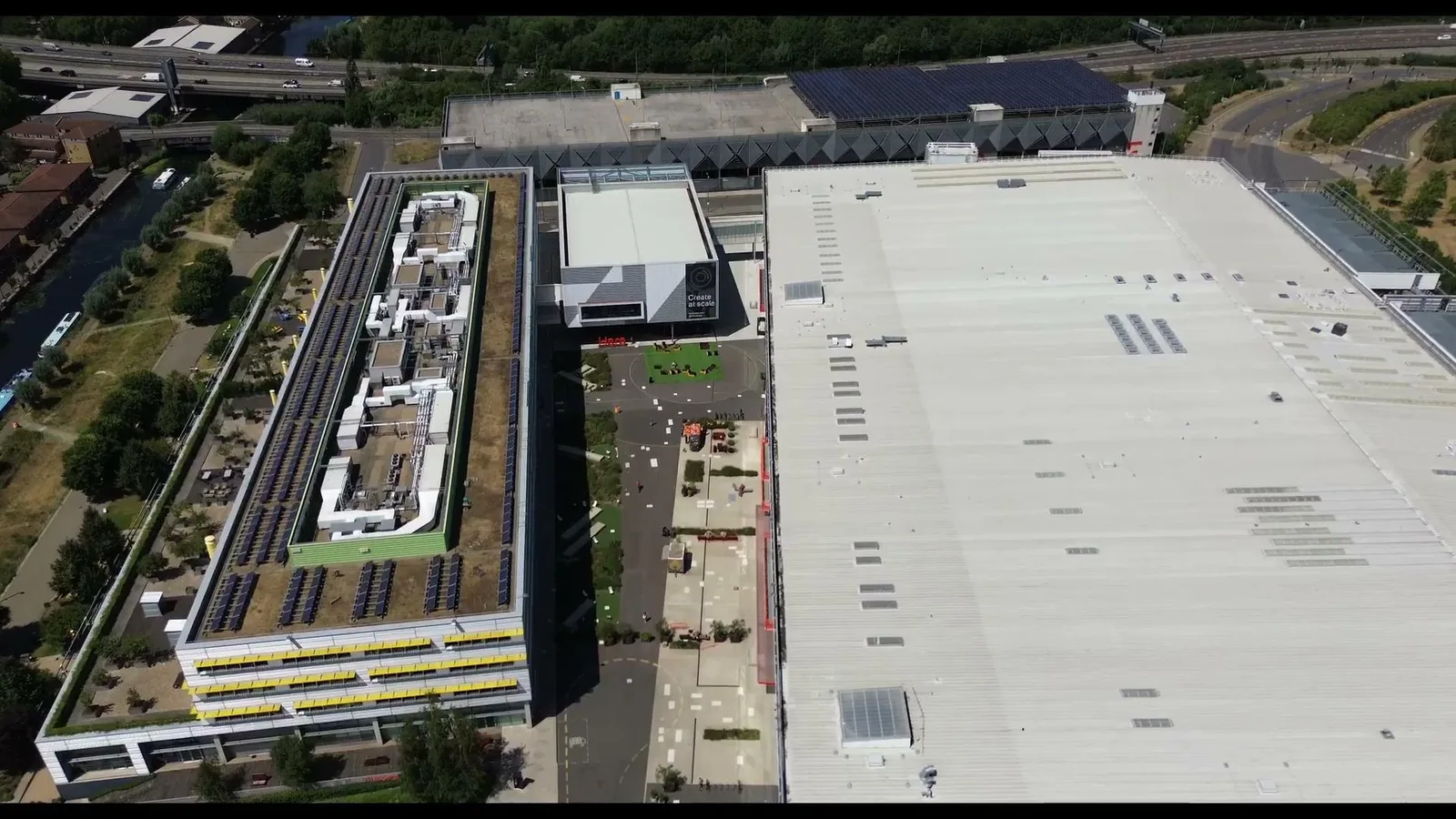
Here East, a former Olympic broadcast centre turned innovation campus in Queen Elizabeth Olympic Park.
Two Layers, One Campus
The team built two connected prototypes. A browser-based digital twin lets anyone explore the campus remotely — navigating a 3D model of Here East and encountering "word bubbles" that surface the conversations, projects, and ideas happening within its walls.
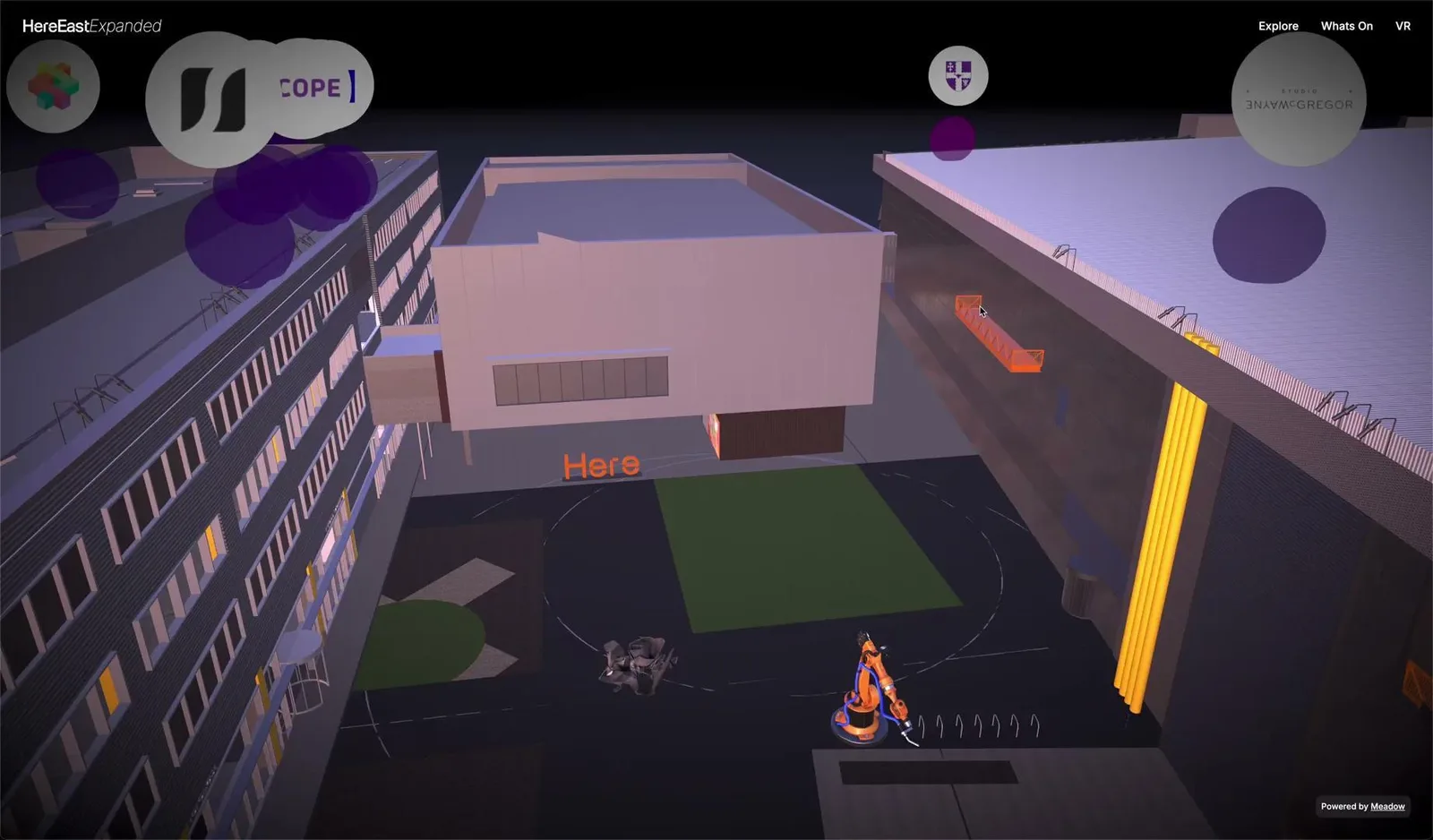
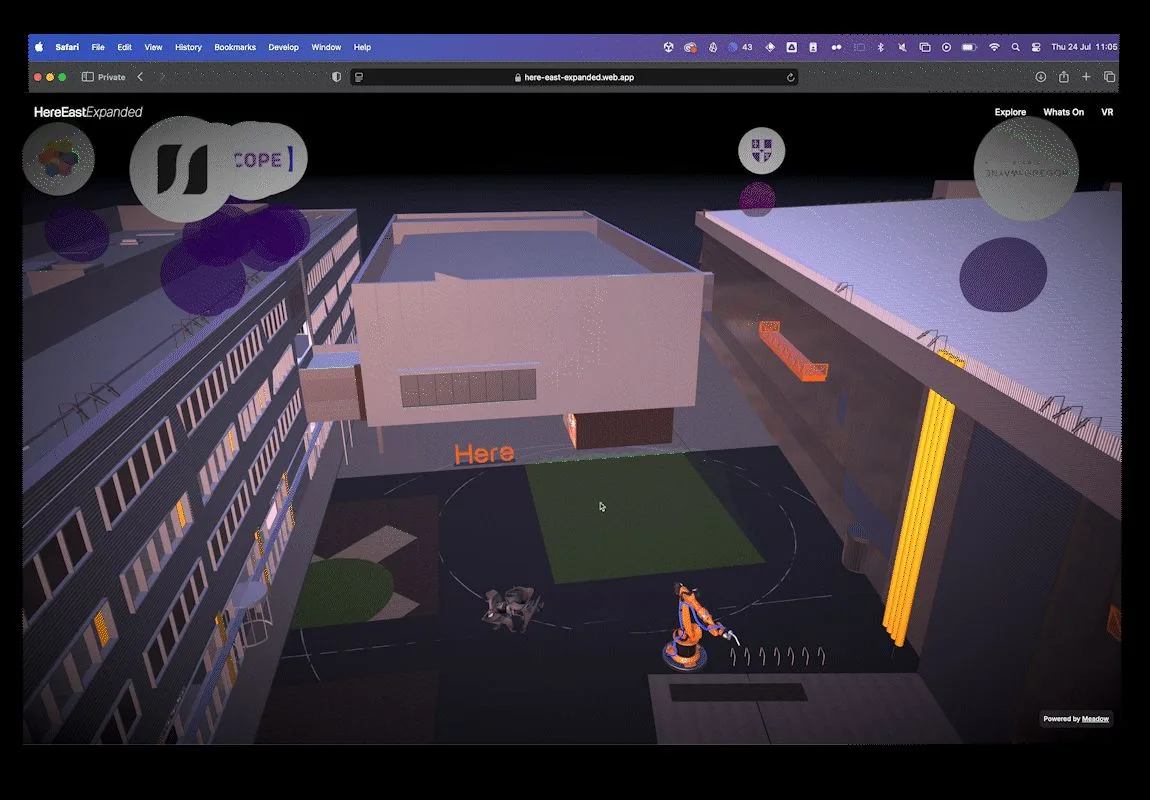
The web-based digital twin of Here East, with tenant bubbles and 3D navigation.
On-site, an AR layer accessible through the Meadow app turns the physical campus into a spatial archive. Visitors walking through The Yard encounter virtual content geolocated to the buildings and spaces where the work actually happens.
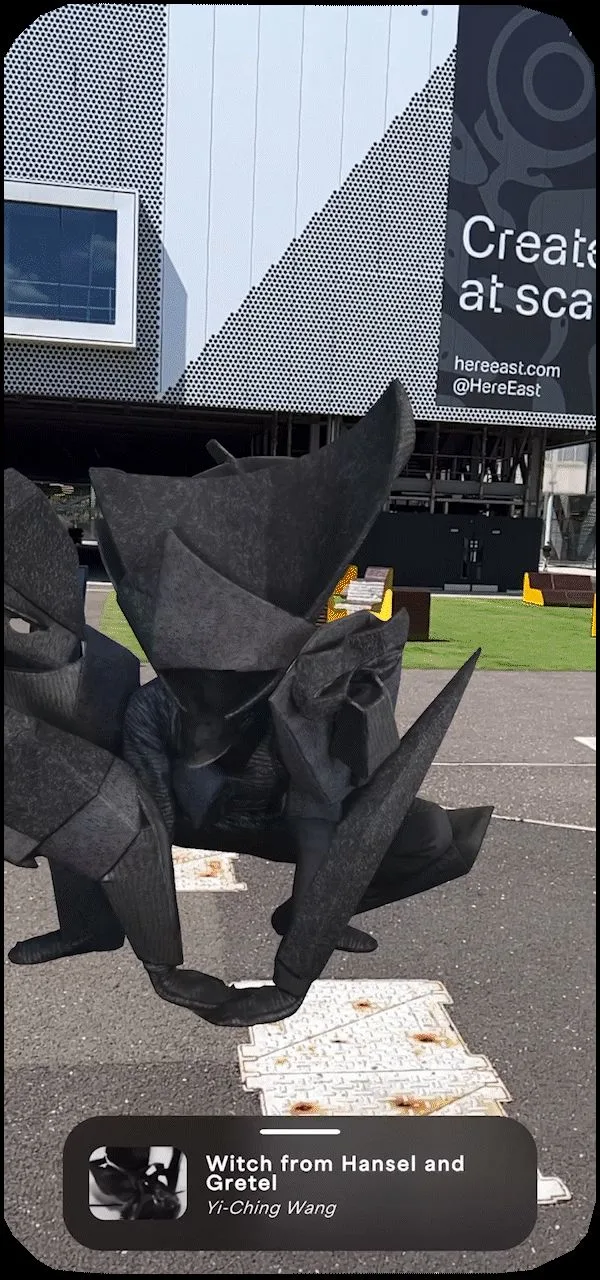
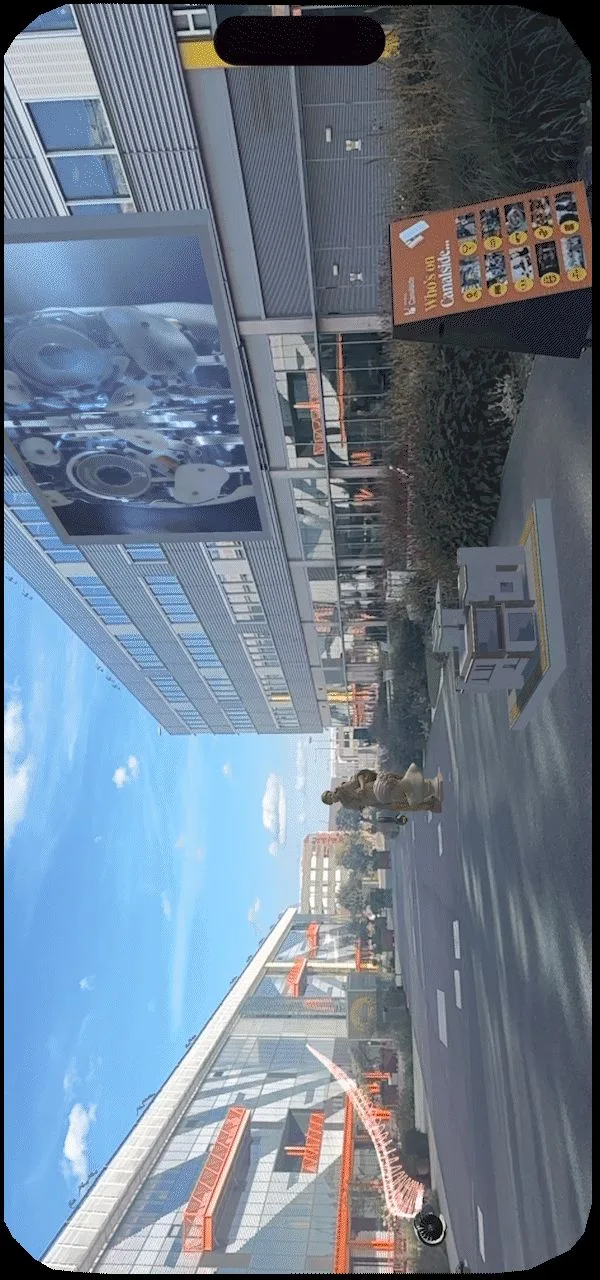
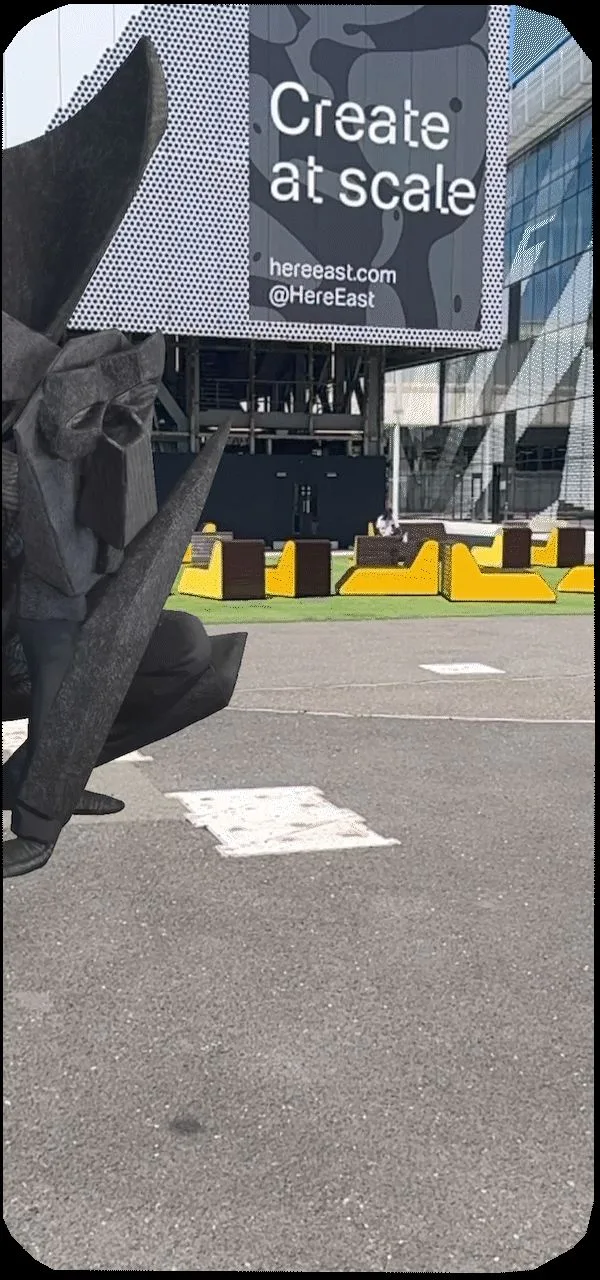
AR artworks and content placed around the Here East campus, viewed through the Meadow app.
The two layers are designed to talk to each other. A conversation started in AR can continue on the web. A remote collaborator can drop into the spatial context of a discussion they missed — not just reading a summary, but re-entering the space where the ideas were formed.
From Prototype to Proof of Concept
Built in just a few months on a £10,000 budget funded by UCL Innovation & Enterprise, the prototype demonstrated what's possible when spatial computing meets institutional infrastructure. Tenants contributed 3D models, video, and research materials that were placed within both the web twin and the AR layer. Students from UAL created original works through an internal competition, ensuring fresh creative voices were part of the fabric from day one.
The AR experience was authored in Unity and published through Meadow's spatial CMS — allowing the team to add, reposition, and update content without rebuilding the app. Visitors enter the AR layer by scanning a single QR code. No markers, no waiting.
Here East Expanded is more than a map. It's a living, breathing story of a campus that is always creating.
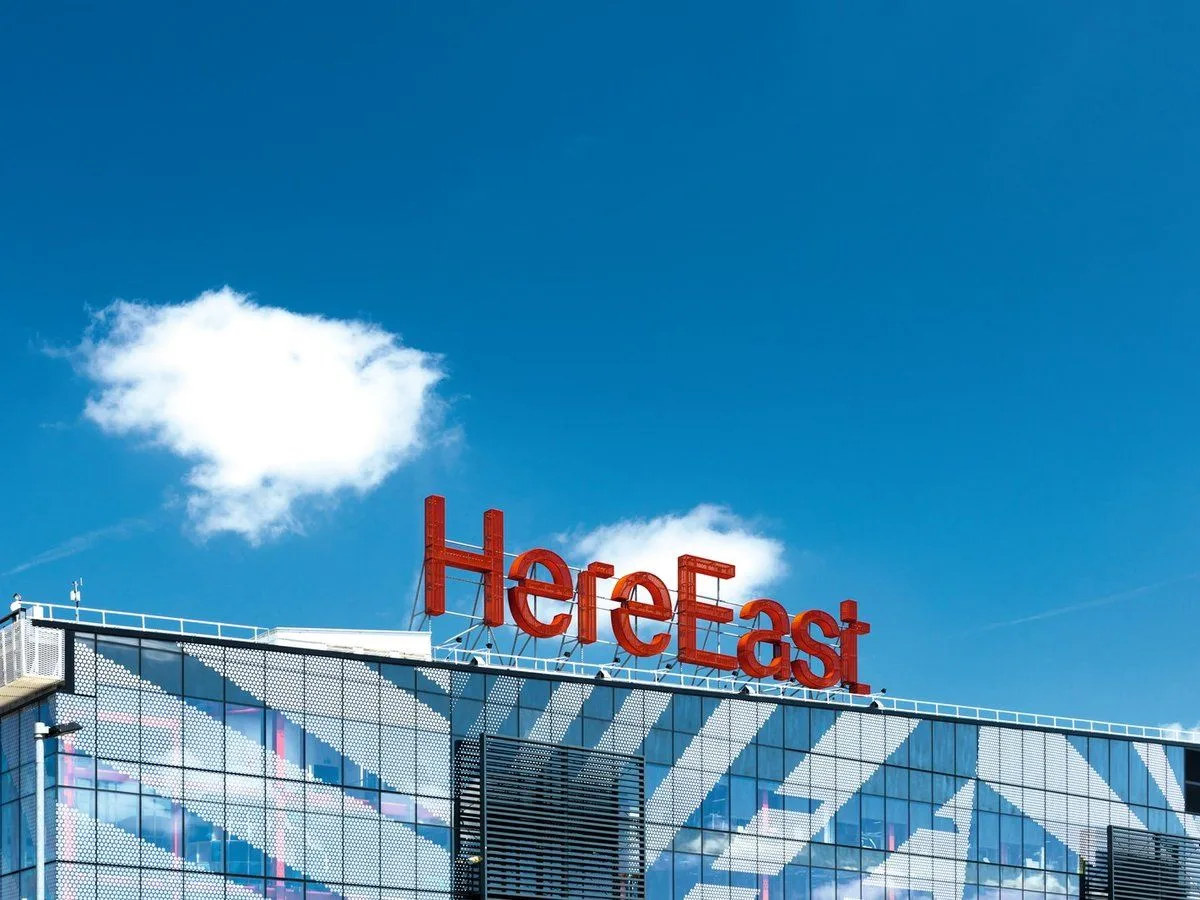
The Here East building at Queen Elizabeth Olympic Park.
Why It Matters
For campuses and innovation districts, visibility is currency. Prospective tenants see who's here, what's possible, and what conversations they can join. Current tenants discover unexpected overlaps with their neighbours. Researchers find collaborators they never knew existed. The platform turns a building directory into a shared, evolving narrative — what the team calls "circular visibility."
The project proved that Meadow can operate at campus scale, delivering a persistent, large-scale AR layer across an entire site rather than fragmented one-off activations. Content updates happen in real time through the CMS, with zero app updates required. And by pairing the on-site AR experience with a web-based digital twin, the project bridged physical and remote engagement in a way that static websites or virtual tours cannot.
The multidisciplinary team is now exploring further funding to take Here East Expanded from prototype to full platform — with tenant self-service tools, real-time social features, and a model designed for creative campuses and innovation districts globally.
Here East Expanded was developed by Untold Garden & Meadow (Max Čelar, Michael Brewster), UCL BodyLab/Creative Experience Futures Lab (Cephas Bhaskar, Flora Sagers), Aquifer Film (Ardeshir Abdolrahimi), with academic partners from UAL (Donatella Barbieri), UEL (Meghdad Bagheri), and Loughborough University (Lora Markova). Funded by UCL Innovation & Enterprise.
Tags
Stay Updated
Get more stories like this delivered to your inbox.